Reading Liberal Democrats call on Labour-run council to commit to new pavement parking crackdown
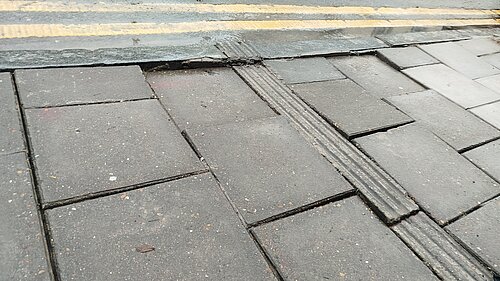
Reading Liberal Democrats are calling on Reading Borough Council to publicly commit to adopting new powers to tackle obstructive pavement parking, after neighbouring Wokingham Borough Council already confirmed it intends to take up the powers once available — while Reading has so far said nothing.
The new civil enforcement powers, created under the English Devolution and Community Empowerment Act which received Royal Assent earlier in 2026, will allow councils to act against vehicles blocking pavements without needing to introduce a new Traffic Regulation Order (TRO) for every street. Councils will be able to issue penalties directly, in the same way they already enforce against parking on yellow lines.
Under the current system, Reading Borough Council can only take action against pavement parking on a street-by-street basis, and has no power at all where a vehicle is parked on private land — even when it is blocking a pavement and creating a hazard for pedestrians. Blocked pavements force disabled residents, older people and parents with pushchairs into the road, and clear, consistent rules across neighbouring boroughs are essential so people know what to expect wherever they are.
Liberal Democrat-run Wokingham Borough Council has already gone public on its intentions, confirming it expects to receive the same civil enforcement powers as the police to act against footway obstruction, and that it supported the idea in principle during the Government's consultation. Wokingham has said it cannot finalise its approach until further guidance is published, but that it is planning now — including asking residents to report pavement parking problems already, so those reports can help shape enforcement priorities once the power is in place. Preparing now means a council can act quickly once the powers land, targeting genuinely dangerous hotspots rather than being caught flat-footed.
Reading Borough Council has made no equivalent public statement.
Cllr James Moore, Liberal Democrat councillor for Tilehurst, said:
"Pavement parking is one of the most common complaints residents raise with me, and it's a genuine safety issue — especially for disabled residents, older people, and parents trying to get a pushchair past a car blocking the path. The Government is finally giving councils the tools to deal with this properly, but Reading's Labour administration has been completely silent on whether it will actually use them.
"Our Liberal Democrat colleagues in Wokingham have already said clearly that they want to adopt these powers, and are already asking residents to log problem locations so they're ready to act as soon as they can. Reading has a reporting tool too, but it's built for existing contraventions, not for getting ahead of a power that doesn't exist yet. There's no reason Reading residents should be left waiting longer than people over the border simply because our council won't say what it's planning.
"Reading doesn't need to wait for the secondary legislation to start listening. It should be straightforward to adapt the Council's existing reporting tool to log pavement obstruction locations too, even where there's no restriction to enforce yet, so officers have a ready-made priority list the moment the new powers land.
"I've submitted a formal question asking the Council to confirm its intentions and timeline. Residents deserve a clear answer, not silence.
"But this has to be done fairly. In some streets, cars are on the pavement because there simply isn't enough parking space, not because anyone's misbehaving. Before issuing fines, the Council should have to show that there was reasonably available space to park legally. Done right, this isn't about blanket enforcement — it's about targeting genuinely dangerous hotspots while leaving alone streets where parking pressure gives residents no realistic alternative. Enforcement shouldn't become a way of penalising residents for a parking shortage that's the Council's own responsibility to address.
"There's also a specific problem outside shops and takeaways, where delivery riders routinely mount the pavement while waiting for orders. Fines alone are unlikely to change that behaviour if riders are confident they won't get caught. A more effective approach would be for the Council to work with businesses to designate small, clearly marked bays for riders to wait briefly, without blocking the pavement or getting in the way of other road users. Other councils are already looking at this alongside enforcement, and Reading should too."
Background
- Under the current regime, enforcement is limited to vehicles parked on the public highway (for example on double yellow lines); the Council has confirmed it has no power to act against vehicles obstructing pavements on private land.
- The secondary legislation needed to bring the new powers fully into force has no confirmed date, but is expected later in 2026, with statutory guidance to follow; councils do not need to wait for that to state their intentions.
- Reading Borough Council already operates an online tool for reporting illegally parked vehicles, but it is designed for existing contraventions (such as parking on double yellow lines) and does not currently capture pavement obstruction where no restriction is in place to enforce.
- Liberal Democrat-run Wokingham Borough Council has already confirmed its intention to adopt the new powers and is inviting residents to report pavement parking problems now via its website, ahead of the powers coming into force.
- Other councils have already begun looking at this issue: Surrey County Council and Epsom & Ewell Borough Council have both passed motions calling for dedicated motorcycle/delivery bays at takeaways and retail developments, alongside talks with delivery platforms such as Uber Eats and Deliveroo.